
The question I hear from parents and teachers across the world is surprisingly similar.
“She is so bright. Why has she stopped caring?”
The assumption is that smart children should naturally love school. Yet many of them slowly lose interest. Not because they have stopped learning, but because they have stopped feeling challenged.
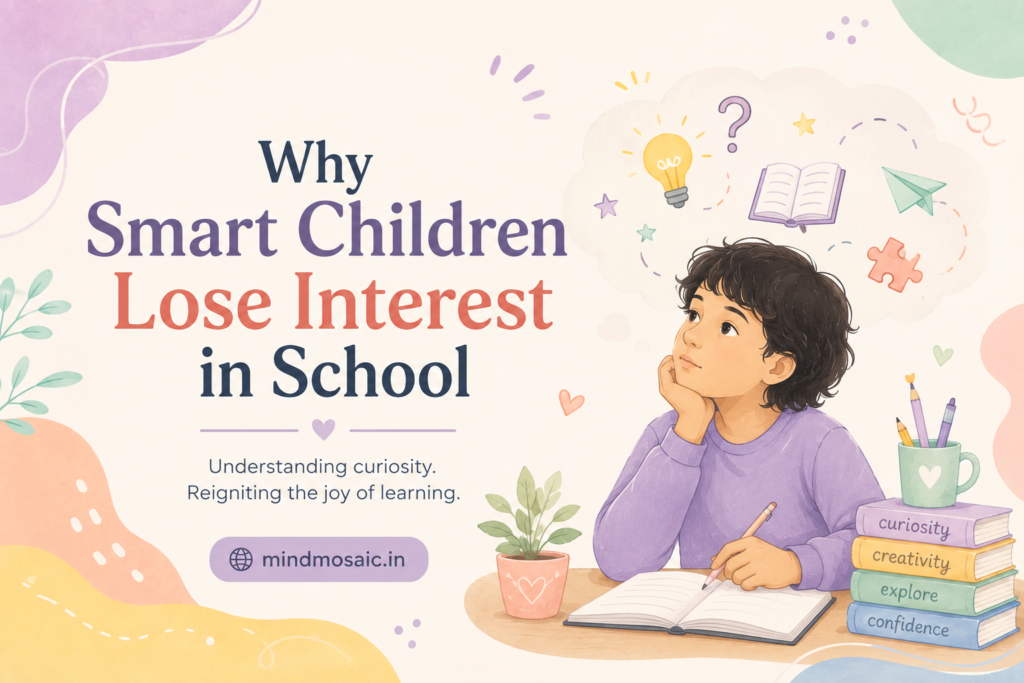
As a psychologist and curriculum developer, I have seen this pattern for over two decades. Bright children are often curious long before they are high achievers. They ask unusual questions, connect ideas across subjects, notice patterns others miss, and enjoy solving real problems. Unfortunately, many classrooms reward the right answer more than an original thought.
When learning becomes predictable, curiosity quietly leaves the room.
Some children begin daydreaming. Some become perfectionists because they fear making mistakes. Others appear lazy, when in reality they are simply disconnected from work that no longer stretches their thinking.
This is not only a school issue. It is a mindset issue.
Children do not thrive on constant praise. They thrive on meaningful challenge, psychological safety and the freedom to wonder.
Parents, teachers and schools can change this with small shifts.
Instead of asking, “Did you finish your homework?” ask, “What surprised you today?” The second question keeps curiosity alive.
Instead of rewarding only high marks, celebrate good questions, creative attempts and thoughtful mistakes. Innovation begins where perfection ends.
A simple hack is the Ten Minute Curiosity Rule. Every day, let a child spend ten uninterrupted minutes exploring any question that genuinely interests them. No grades. No testing. Just learning for the joy of learning.
The smartest children are not looking for easier work. They are looking for meaningful work.
When we feed curiosity instead of only measuring performance, school becomes more than a place to score marks. It becomes a place where intelligence grows into wisdom.
Leave a Reply