Author: mindmosaic

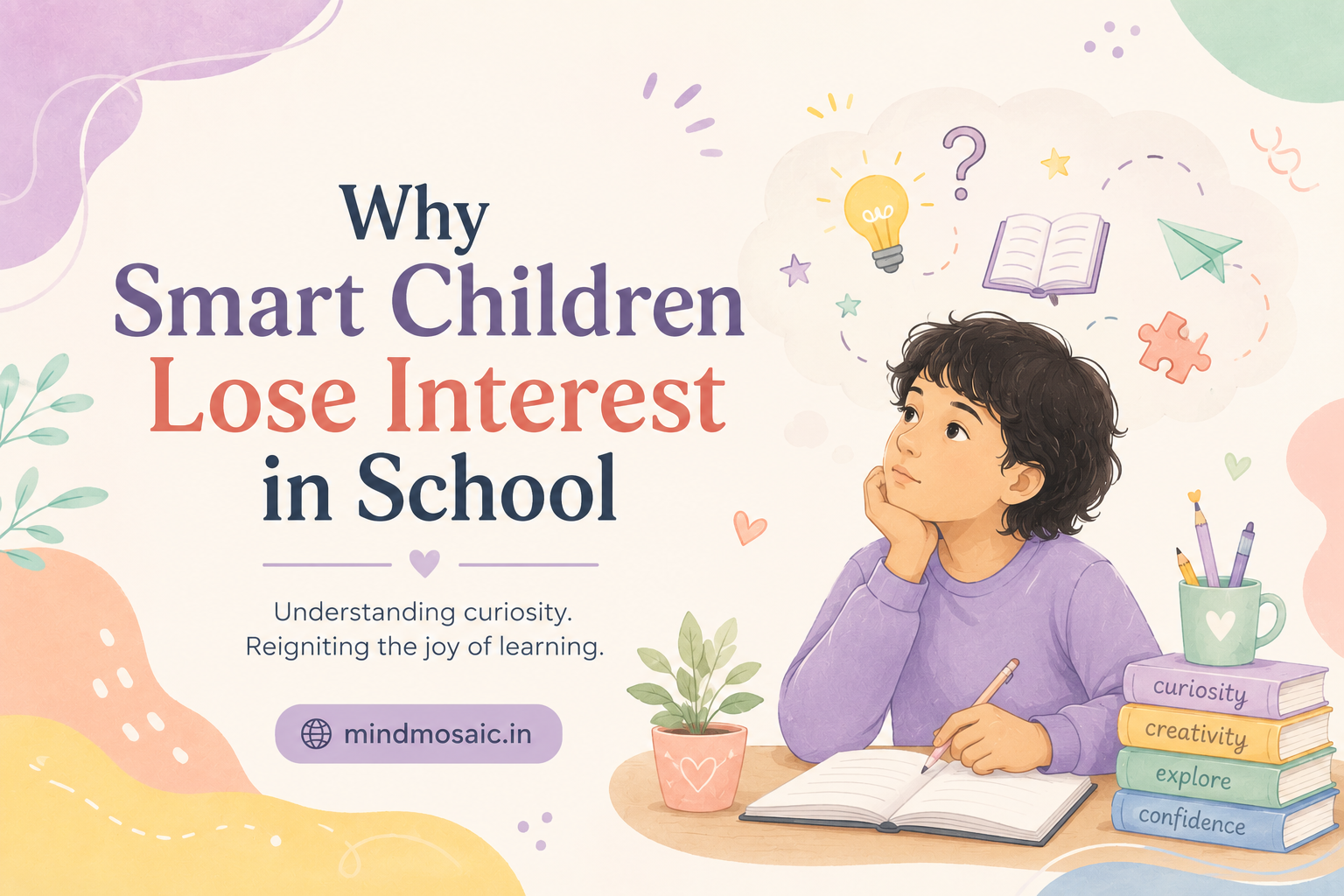
Why Smart Children Lose Interest in School
Why do some of the brightest children slowly lose interest in school? The answer is rarely a lack of intelligence. More often, it is a lack of meaningful challenge. When curiosity is replaced by routine and learning becomes predictable, even the smartest minds begin to disconnect. As a psychologist and curriculum developer with over 20…
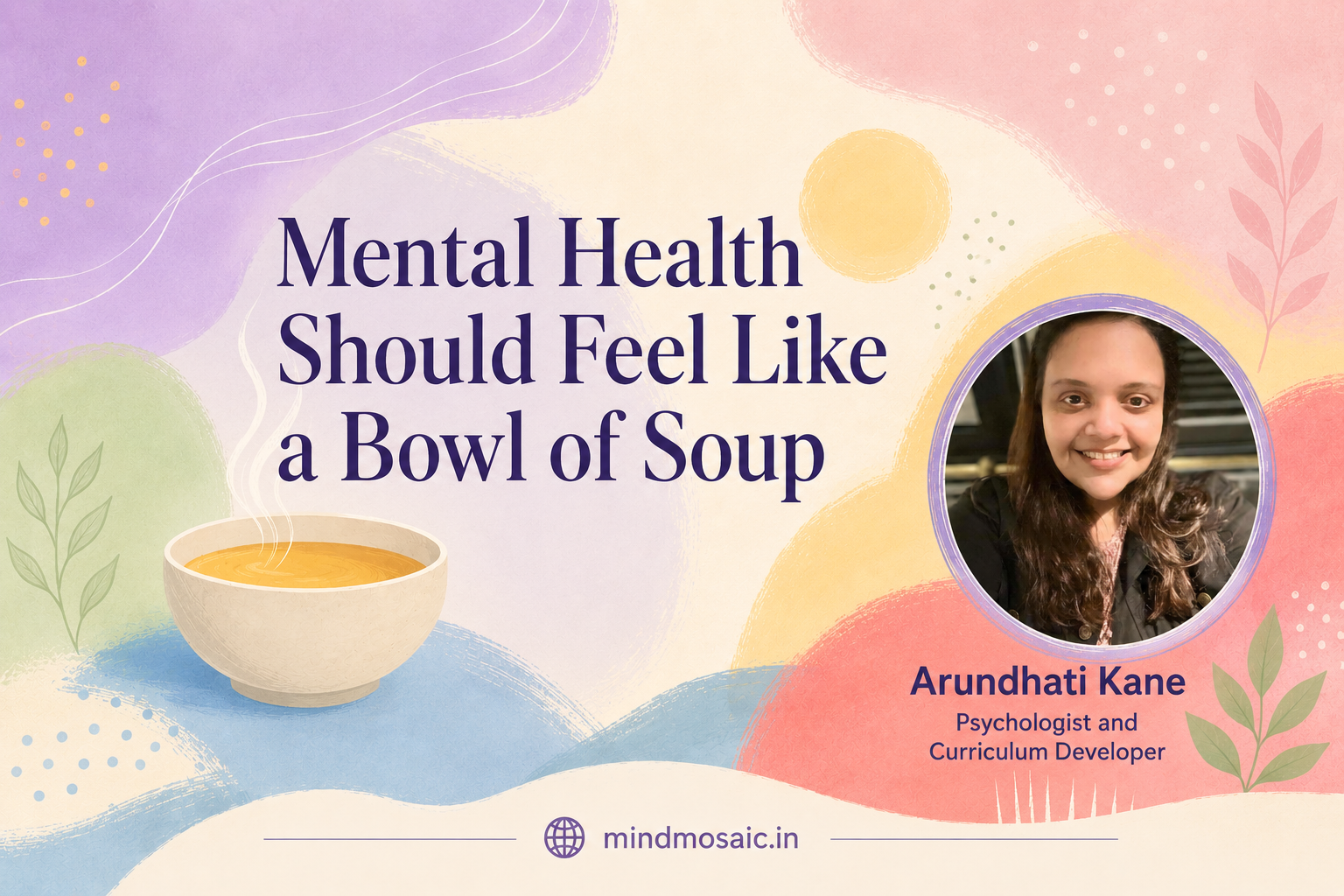
Mental Health Should Feel Like a Bowl of Soup
After twenty years of practice, I have come to believe that mental health should feel less like a perfect salad and more like a good bowl of soup. A salad can be fussy. Everything visible. Everything expected to look fresh, crisp, colourful, balanced. Soup is different. Soup allows life to be messy. You can have…

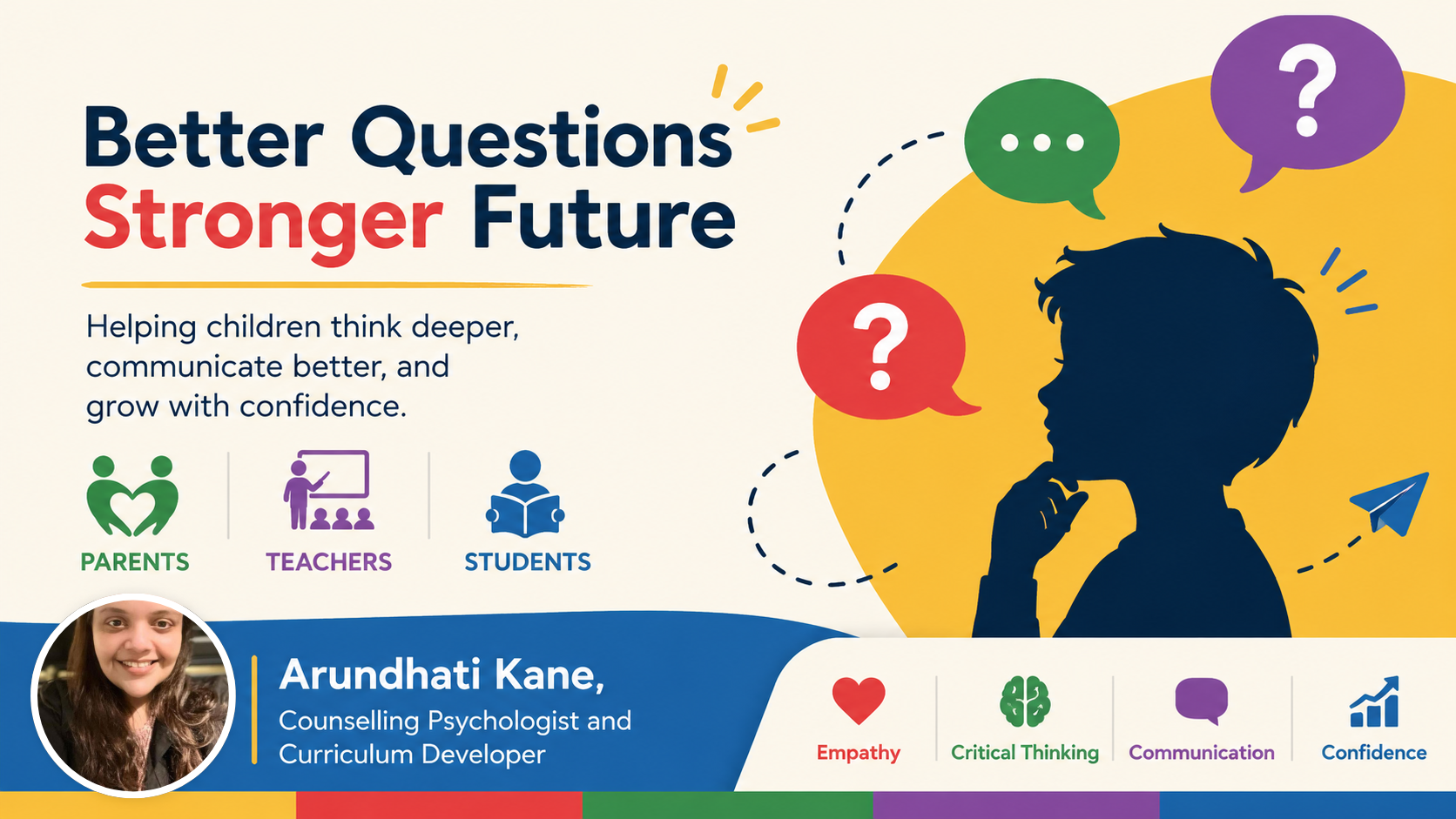
AI Can Give Answers. Can Your Child Ask Better Questions?
A few years ago, children would ask Google for answers. Today, they ask AI. The interesting part is that getting answers is no longer the challenge. The real skill is knowing what to ask. Imagine a child typing, “Tell me about climate change.” They will get hundreds of facts. But a child who asks, “How…
Why Can’t I Stop Overthinking?
Understanding the Anxiety Loop and How Therapy Helps Have you ever replayed a conversation in your head long after it ended? Maybe you keep wondering, “Did I say something wrong?” or “What if they misunderstood me?” If this sounds familiar, you are not alone. Overthinking is often our mind’s way of trying to protect us…

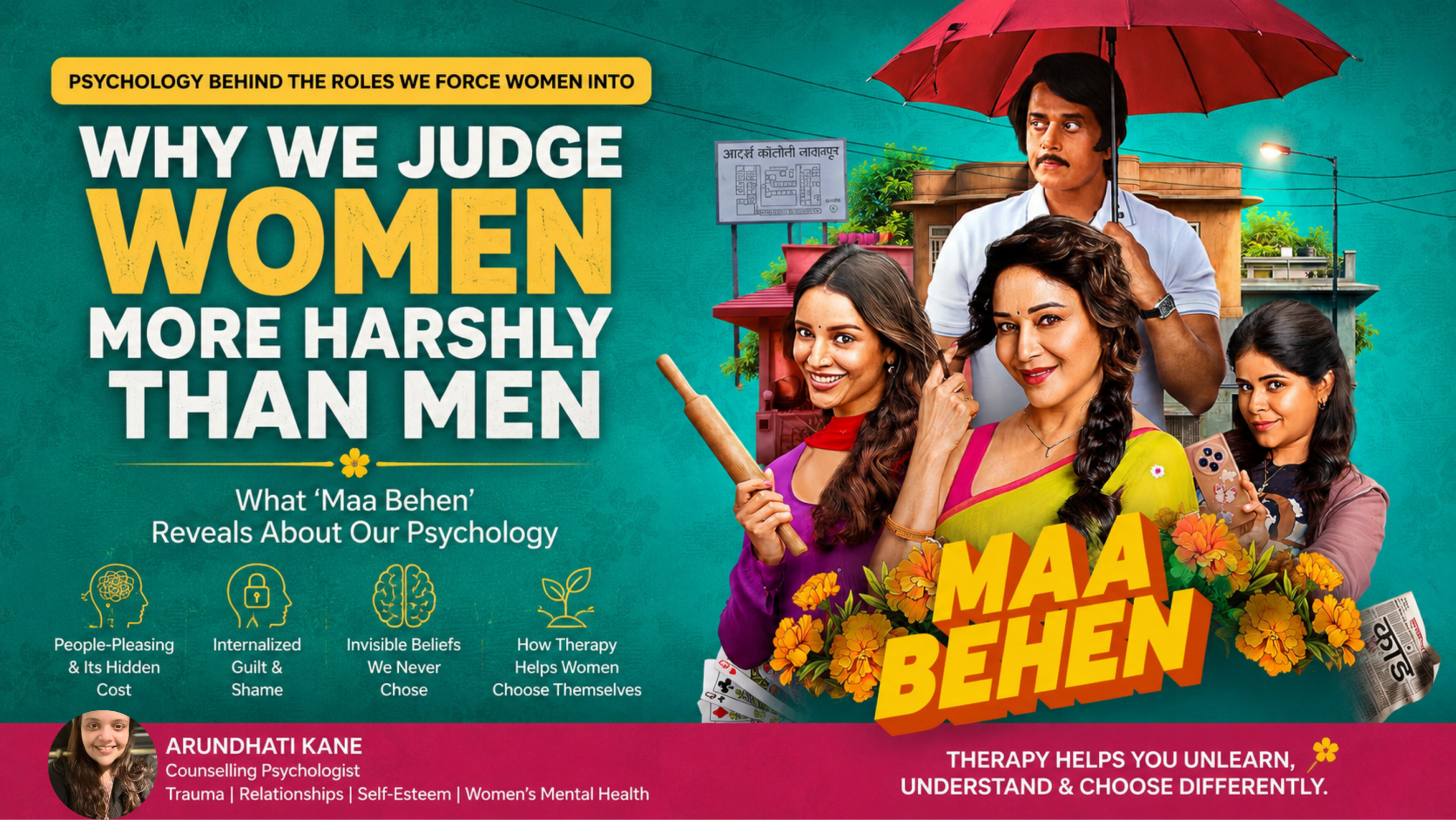
Why We Judge Women More Harshly Than Men: What Maa Behen Reveals About Our Psychology
The recent conversations around Maa Behen made me think about something I often see in therapy. Why are women still expected to fit neatly into certain roles? The “good daughter.” The “good sister.” The “good wife.” The “good mother.” And what happens when a woman chooses herself? For many people, that choice feels uncomfortable. Not…
Why So Many Adults Struggle to Ask for Help
Many adults struggle to ask for help because somewhere along the way, they learned that being “strong” meant handling everything alone. Some grew up being told not to cry. Others became the dependable one in the family, friend group, or workplace. Over time, emotional suppression starts feeling normal. One client came to therapy saying, “I…
Why Validation Has Become More Addictive Than Motivation
We live in a world where people no longer ask, “Am I happy with myself?” They ask, “Did people notice me?” That shift is changing mental health more than we realize. Today, validation has become more addictive than motivation. And social media is one of the biggest reasons why. Every notification, like, comment, share, or…

Why Smart People Still Struggle With Overthinking
Smart people are excellent at solving problems. Unfortunately, the brain does not know when to clock out. Overthinking is not a lack of intelligence. It is intelligence working overtime without a manager. I have seen this often in counselling and education. The sharper the mind, the more angles it sees. What looks like one situation…
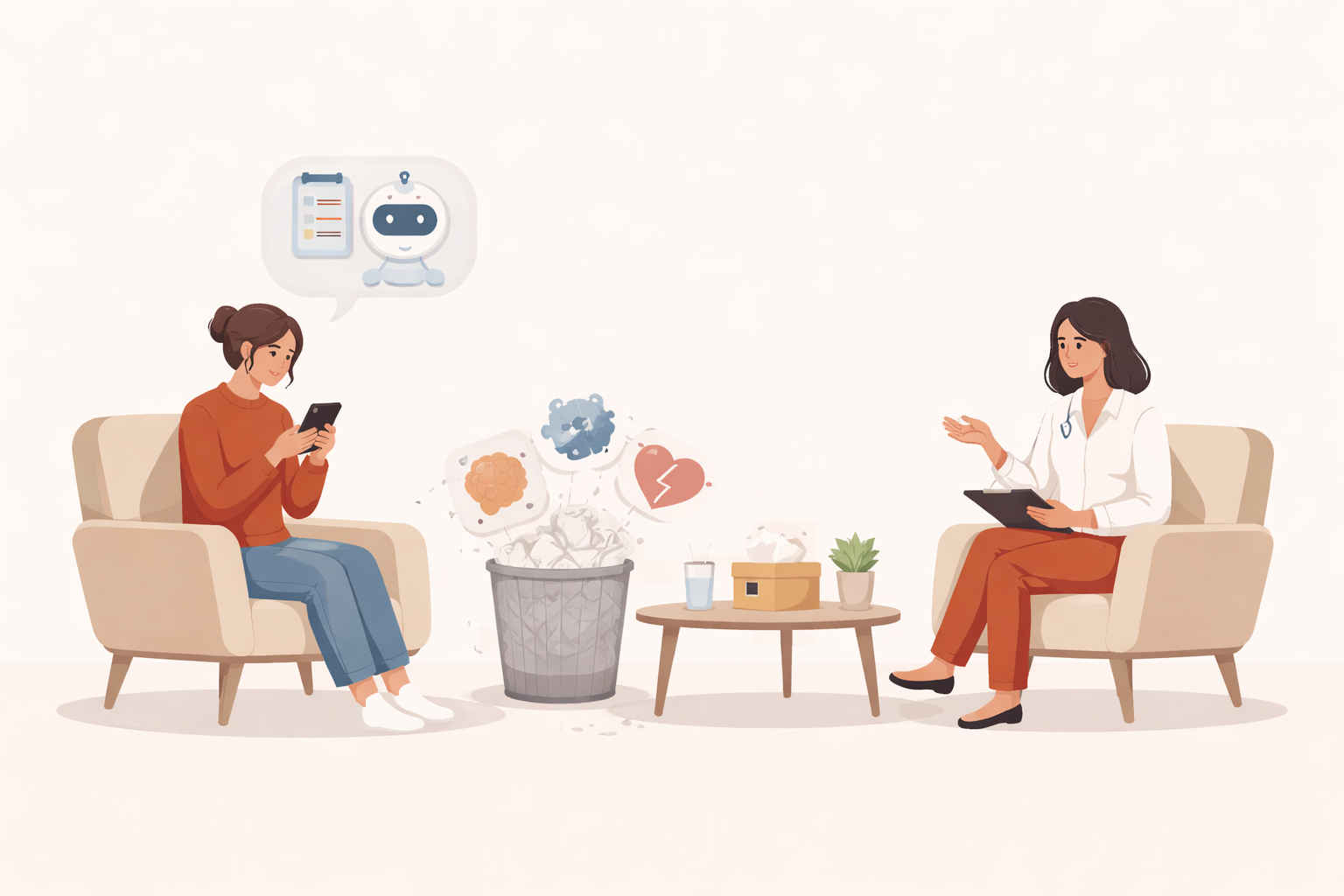
When AI Becomes the Co Therapist in the Room
—
by
A growing shift in therapy today is this: Many clients now walk into sessions after asking AI what is wrong, what trauma they have, what attachment style they are, and which therapy technique should “fix” them. They arrive with labels. They arrive with scripts. They arrive with treatment plans written by a machine that has…

5 Things Students Learn That Are Not Written Anywhere in the Curriculum
Students learn far more in school than what any syllabus admits. Beyond textbooks and lesson plans, classrooms quietly teach competition, compliance, how long to wait for permission, and what happens when you get things wrong. These invisible lessons shape confidence, curiosity, and decision making long after exams are over. The real curriculum is not just…