
A few years ago, children would ask Google for answers. Today, they ask AI.
The interesting part is that getting answers is no longer the challenge. The real skill is knowing what to ask.
Imagine a child typing, “Tell me about climate change.” They will get hundreds of facts. But a child who asks, “How will climate change affect my city in the next ten years?” is likely to get a more meaningful answer. The same applies in everyday life.
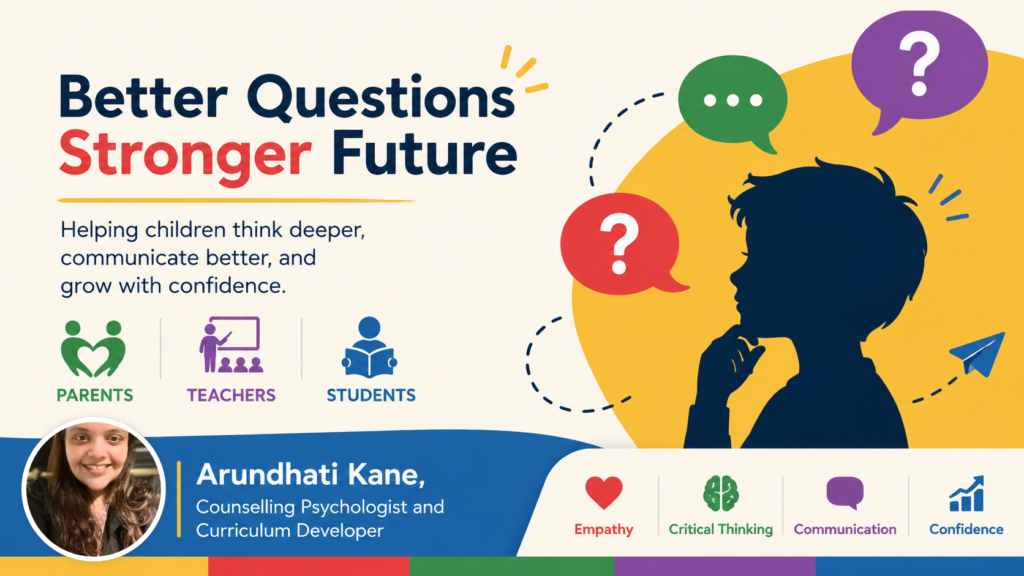
When a student says, “I am bad at maths,” learning stops. But when they ask, “Which step am I getting wrong?” learning begins.
When a parent hears, “I do not like school,” it helps to ask, “What part of school feels difficult today?” A better question often leads to a better conversation.
As educators and parents, we do not need children to know every answer. We need them to stay curious.
One simple way to encourage this is to respond to questions with another question.
If a child asks, “What should I do for my project?” try asking, “What are three different ways you could approach it?”
If they ask, “Is this the right answer?” ask, “How did you arrive at it?”
These small shifts build confidence, critical thinking and independence.
AI will continue to become smarter. Answers will become faster and easier to access. But curiosity, reflection and thoughtful questioning will remain uniquely human skills.
The future may belong not to those who know the most answers, but to those who know how to ask the most meaningful questions.
Leave a Reply